Why PET? (a little tip: “pet” is also a number 5 in Slovenian)
- PET = Pasja Enota Terapevtov (Canine Unit of Therapists)
- PET is something you give for a job well done (give me five!)
- PET is the number of paw pads on a dog’s paw
- PET is the number of our areas of work (AAT, AAA, AAE, READ-AAT, READ-AAA)
- PET is the highest grade in school (and we love receiving them just as much as we love giving them)
- to PET – to stroke or cuddle, which is one of the things people do with our dogs
- a PET – a pet, which is what our dogs are
- PET prijateljev (Five friends) is a book series by Enid Blyton in which a group of young detectives solve small and big mysteries, always under the watchful eye of their dog
Meet our therapy teams
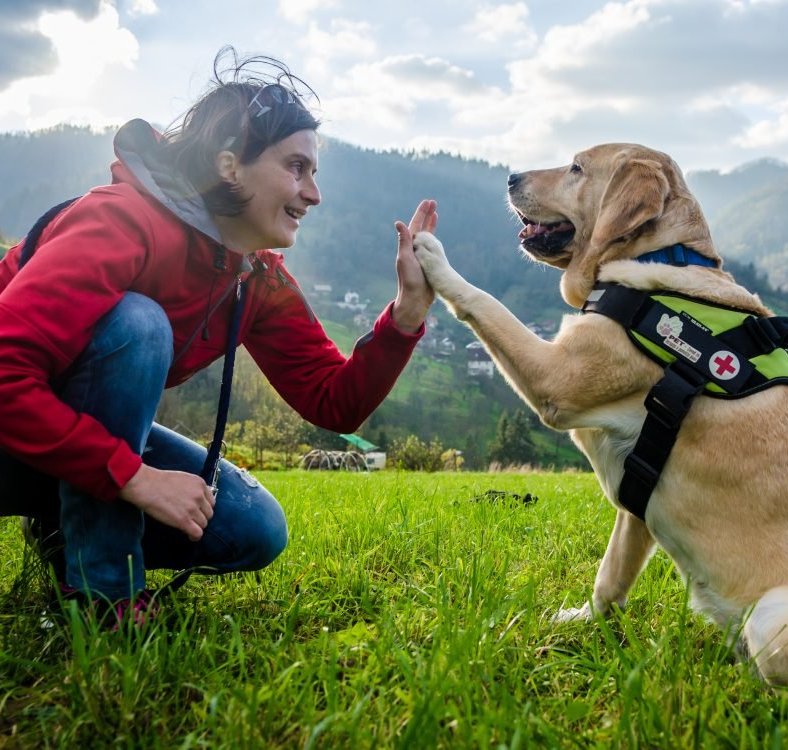
Behind every therapy visit are a person and a dog – a therapy team who, through their knowledge, dedication and mutual trust, create a space for connection, support and well-being.
Meet the teams who currently visit institutions throughout Slovenia, as well as those who have already completed their mission.
Institutions where we work
Our therapy teams work in healthcare, rehabilitation, social care and educational institutions throughout Slovenia. These include URI Soča, University Medical Centre Ljubljana, University Medical Centre Maribor, Idrija Psychiatric Hospital, Dornava Institute, as well as numerous care homes for older people and primary schools.
Everyone on the ward who observes the effects of therapy dog visits on the children’s well-being is impressed by them and grateful to the handlers for the help, support and comfort provided to our patients.
Marta Marenče, Specialist in Special Education, Department of Child Psychiatry, University Children’s Hospital Ljubljana
OUR STORY
About PET
The story of the PET Institute began even before its official establishment in 2011. The first visits with dogs took place through kennel clubs and other informal initiatives. These experiences sparked a desire for a more organised, professional and collaborative approach. In 2011, eleven founding members established the PET Institute – the Canine Unit of Therapists.
Over the years, the Institute has grown, welcoming new members and therapy teams while developing its programmes and approach. Although the pandemic significantly limited visits for a period of time, activities gradually resumed, and today therapy teams visit a wide range of institutions throughout Slovenia. An important part of this development has been continuous education, testing and licensing of therapy teams, as well as a strong commitment to the well-being of the dogs.
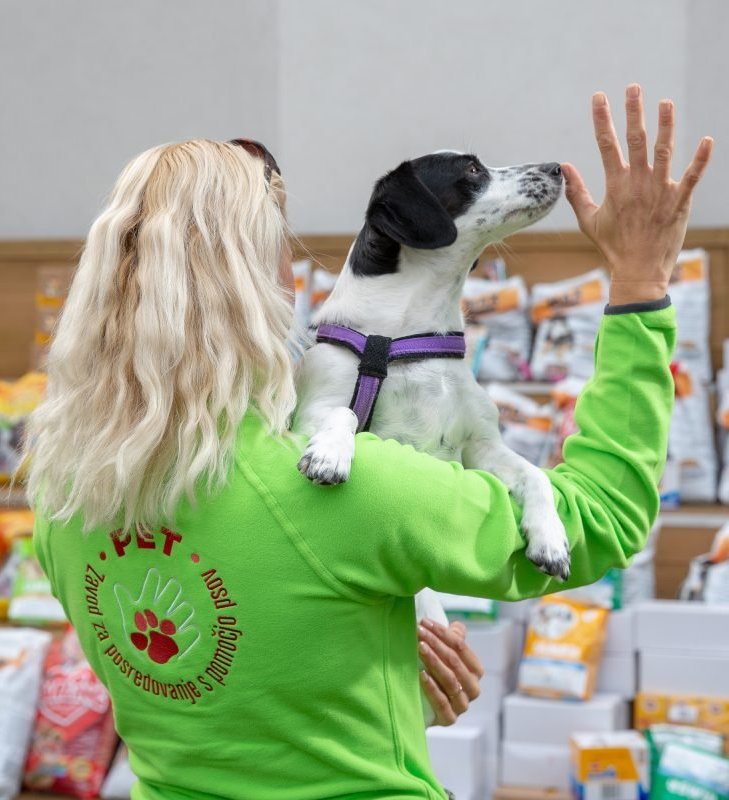
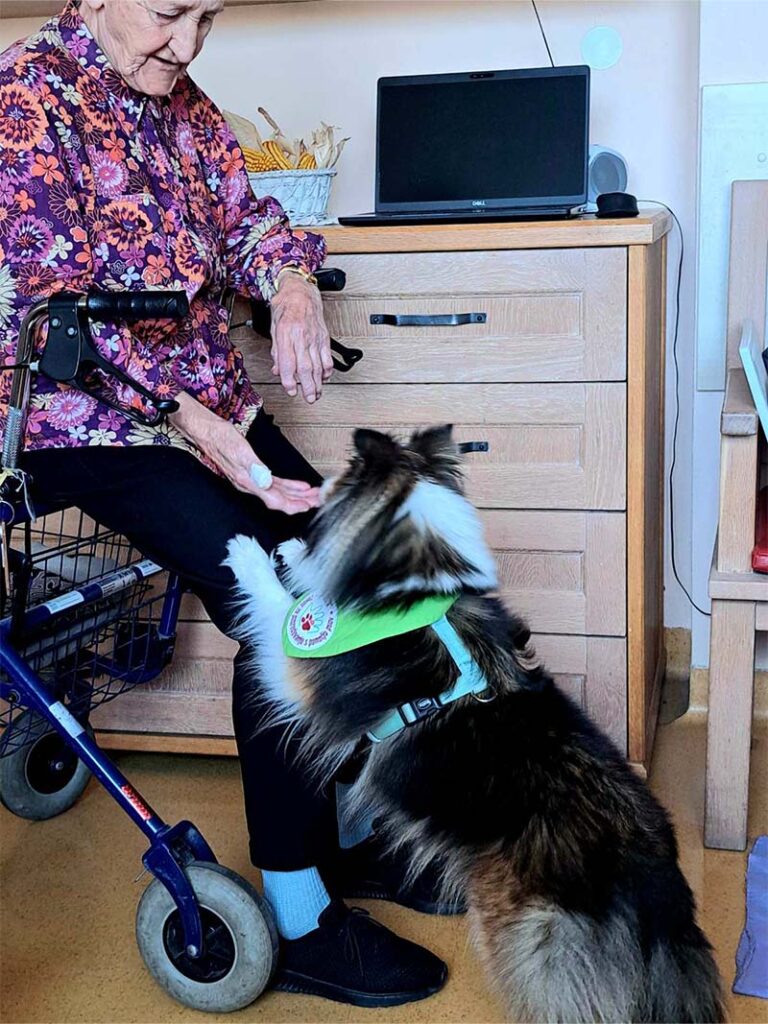
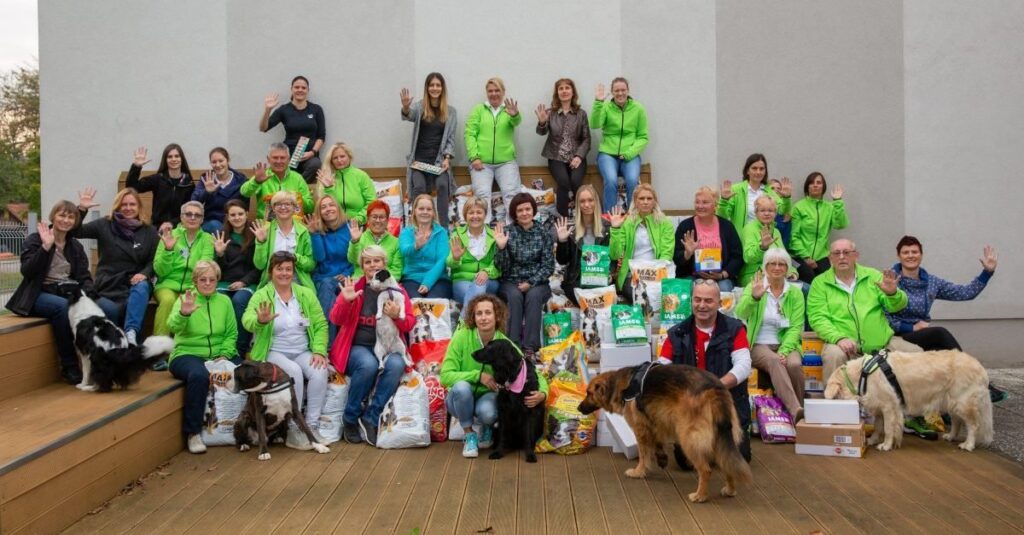
Behind all of this, however, are not just numbers, programmes and standards, but above all people and their stories. Children, older people, patients and other beneficiaries often look forward to therapy dog visits with great anticipation. Those moments – a smile, a touch, a conversation or simply a feeling of closeness – are what have defined the work of the PET Institute from the very beginning.
Principles of Animal-Assisted Interventions
A fundamental prerequisite for providing animal-assisted interventions is compliance with the requirements set out in the European Convention for the Protection of Pet Animals, as well as compliance with Slovenian animal welfare and protection legislation.
The dog handler is responsible for providing the animal with appropriate accommodation and care in accordance with animal welfare regulations. The person carrying out an animal-assisted intervention is responsible for the dog’s well-being throughout the intervention. They must ensure that the frequency, duration and intensity of the intervention are adapted to the dog’s well-being and must take all necessary measures to ensure that the animal remains comfortable and at ease. At the first signs of distress or stress, the intervention must be stopped immediately.
Professional Standard SIST 1192
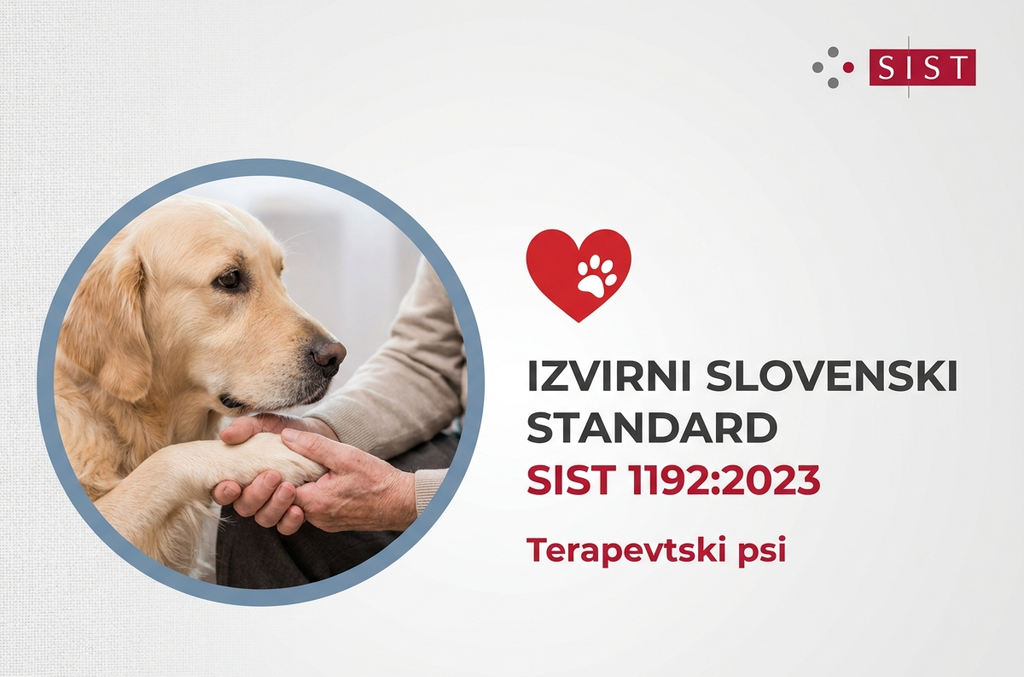
The principles of responsible work with therapy dogs are also defined by the Slovenian national standard SIST 1192 Therapy Dogs. The standard sets professional criteria for the training and work of therapy teams and places particular emphasis on the dog’s welfare, the safety of beneficiaries and the responsible provision of animal-assisted interventions.
Frequently Asked Questions
Where can I get more information about the PET Institute?
For more information, please contact us at info@zavod-pet.si. We will be happy to answer your questions.
How much is the annual membership fee?
The annual membership fee is determined each year by the Institute’s Board. For 2026, the annual fee is €40 for employed members and €20 for students, pensioners and unemployed persons.
Where can I find all the forms required to apply for membership?
All the forms required to apply for membership are available on our website under the “Join Us” section.
I have just submitted my membership application to the PET Institute. How long will I have to wait for a response from the Membership Committee?
Membership applications are processed by the Membership Committee, which informs each applicant of its decision as soon as possible.
What is the process for becoming a therapy team?
The process of obtaining a therapy team licence at the PET Institute is as follows:
Dog assessment: the dog must be at least 12 months old at the time of assessment.
General education programme: candidates attend full-day training sessions and workshops consisting of theoretical and practical components.
Internship: after completing the general education programme, the trainee therapy team must complete at least 25 hours of practical training in different institutions.
Theoretical and practical examination: after completing the practical training and submitting the required documentation, the trainee therapy team takes a theoretical and practical examination to obtain the therapy team title. The examination takes place at one of the institutions where therapy teams operate. The theoretical part is written, while the practical examination involves demonstrating work with the dog.
Therapy team licence: after successfully completing the education, internship and assessment stages, the trainee therapy team and their dog receive the title of therapy team and a PET Institute licence to carry out therapy work. The licence is valid for two years.
Is additional training required to carry out the READ programme?
To carry out the READ programme, candidates must first complete the education described above for therapy teams. The dog must then undergo additional assessments, followed by specialised training for the READ programme. After completing the training, the handler takes the official R.E.A.D.® programme examination in English. The complete documentation for the therapy team, together with the successfully completed examination, is sent by the Institute to the headquarters of Intermountain Therapy Animals in the United States, which issues the official licence.
I have passed the BBH / BH-VT examination. Is that enough to work as a therapy team?
No. Every candidate must complete the required professional education and internship, followed by theoretical and practical examinations, in order to obtain the title of therapy team.
I am a member of another animal-assisted intervention organisation. Can I also become a member of the PET Institute?
No. If you are already a member of another organisation providing animal-assisted interventions, you cannot simultaneously become a member of the PET Institute.
Which institutions can we visit once we become a therapy team?
Our therapy teams currently work in the following institutions:
University Children’s Hospital Ljubljana, University Children’s Hospital Maribor, University Rehabilitation Institute of the Republic of Slovenia (URI Soča), Dornava Institute for Training, Work and Care, Idrija Psychiatric Hospital, Radovljica Care Home, Thermana Laško Care Home, Gornji Grad Care Home, Eberlovo Dom Izlake, Golovec Centre for Care and Work, Idrija Retirement Home, Nova Gorica Retirement Home, Bežigrad Retirement Home, OŠ Helene Puhar Kranj, OŠ Jožeta Moškriča Ljubljana, OŠ Hinka Smrekarja Ljubljana, OŠ Cerkno, OŠ Dr. Ljudevita Pivka Ptuj, OŠ Miren, OŠ Dr. Mihajla Rostoharja Krško, OŠ Brezovica pri Ljubljani, SIC Brežice, Waldorf Kindergarten and School Savinja, OŠ Žetale, as well as one-off presentations at primary schools and kindergartens.
What activities does the PET Institute provide?
The PET Institute provides the following types of Animal-Assisted Interventions (AAI):
Animal-Assisted Therapy (AAT)
Animal-Assisted Activity (AAA)
The Institute also provides animal-assisted interventions in specific areas, including:
Animal-Assisted Education (AAE)
Reading Education Assistance Dogs (R.E.A.D.®)
Does a therapy dog have to be a pedigree dog?
No. A trainee therapy dog does not need to have a pedigree. The dog’s temperament and appropriate socialisation are what matter.
Can my puppy become a candidate for a therapy dog?
A dog may undergo the suitability assessment for animal-assisted interventions once it is physically and emotionally mature, or at a minimum age of 1 year. A dog can obtain the title of therapy dog at a minimum age of 2 years.
My dog is deaf/blind. Can it still become a therapy dog?
No. Only a completely healthy dog can work as a therapy dog.
What are the health requirements for a therapy dog?
Dogs must be vaccinated against all diseases required by law and by the PET Institute’s internal professional regulations.
All therapy dogs and trainee therapy dogs that are active in institutions must undergo a veterinary examination twice a year. The examinations are carried out by a veterinarian contracted by the Institute. Without a successfully completed veterinary examination and a valid veterinary certificate, a therapy dog is not permitted to enter an institution. If a handler carries out an animal-assisted intervention with a dog that does not meet these requirements, their licence is automatically revoked.
Dogs must be healthy and well-groomed when entering an institution. Handlers are responsible for regular prevention and treatment of external and internal parasites. They are also responsible for the dog’s grooming and hygiene, including clean skin and coat, ears and eyes, trimmed nails, clean paw pads and a clean oral cavity.
Is a therapy dog insured?
All dogs belonging to working members are covered by liability insurance.
What is the difference between Animal-Assisted Therapy (AAT) and Animal-Assisted Activity (AAA)?
Animal-Assisted Therapy (AAT) is an intervention in which specific goals are defined for each individual and progress is recorded. The therapy takes place over a longer period of time. The therapy team (handler and dog), the beneficiary and a professional working at the institution all participate in the therapy.
Animal-Assisted Activity (AAA) is an intervention in which individual goals are not specifically defined and recording progress is not mandatory. A visit may be a one-off or spontaneous. An AAA session generally involves the therapy team (handler and dog) and the beneficiary. A professional may also participate, but this is not required.
Can beneficiaries of animal-assisted interventions contract a disease from a therapy dog?
No. The requirements for carrying out animal-assisted interventions are described in Section 13. If a dog does not meet the required conditions, it cannot carry out therapy work.