Animal-Assisted Intervention (AAI)
Animal-Assisted Intervention (AAI) refers to any planned intervention in which animals that meet specific criteria are intentionally incorporated into a process to support people, improve their well-being or enhance their quality of life. AAI can be used in a variety of fields, from upbringing and education to healthcare, therapy and social care.
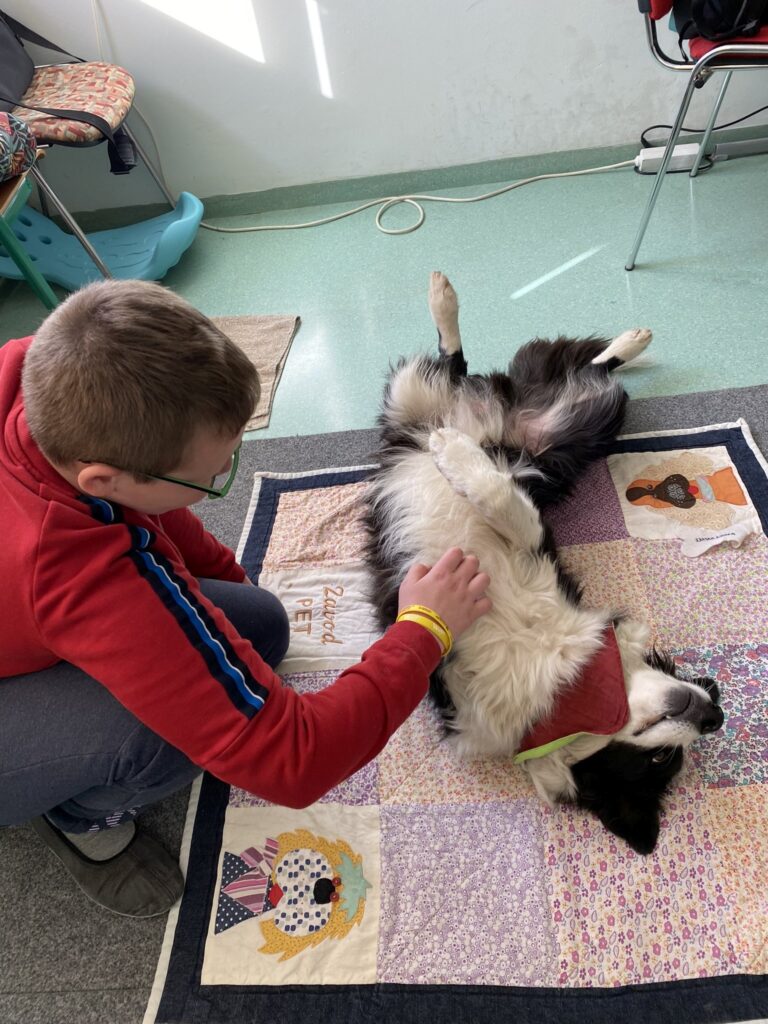
AAI can take place individually or in groups and is based on a positive and safe relationship established between the participant, the dog and the therapy dog handler. This relationship provides an important foundation for carrying out various activities and achieving the intended goals.
Zavod PET works exclusively with dogs, so throughout the following sections, the term “animals” refers to dogs.
Our Activities
We adapt our dog-assisted interventions to different participants and environments by offering a range of approaches.

Dog-Assisted Activities
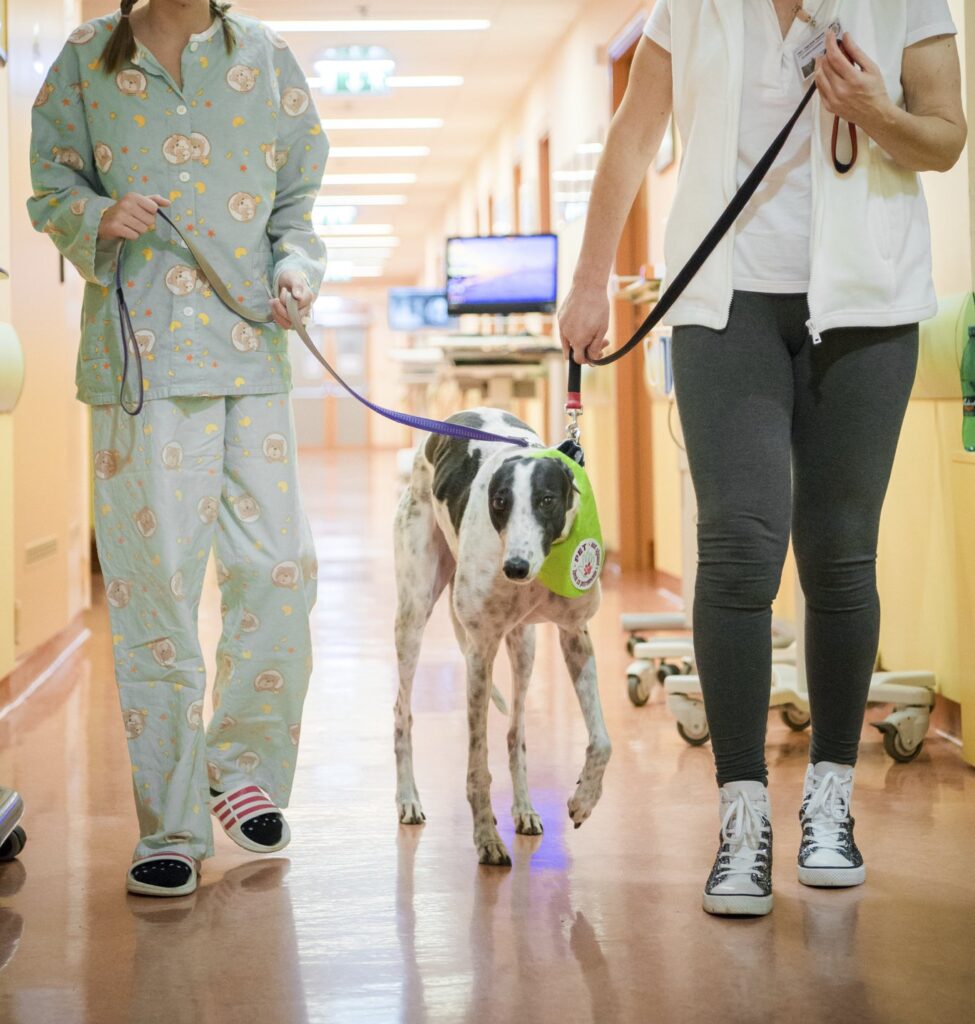
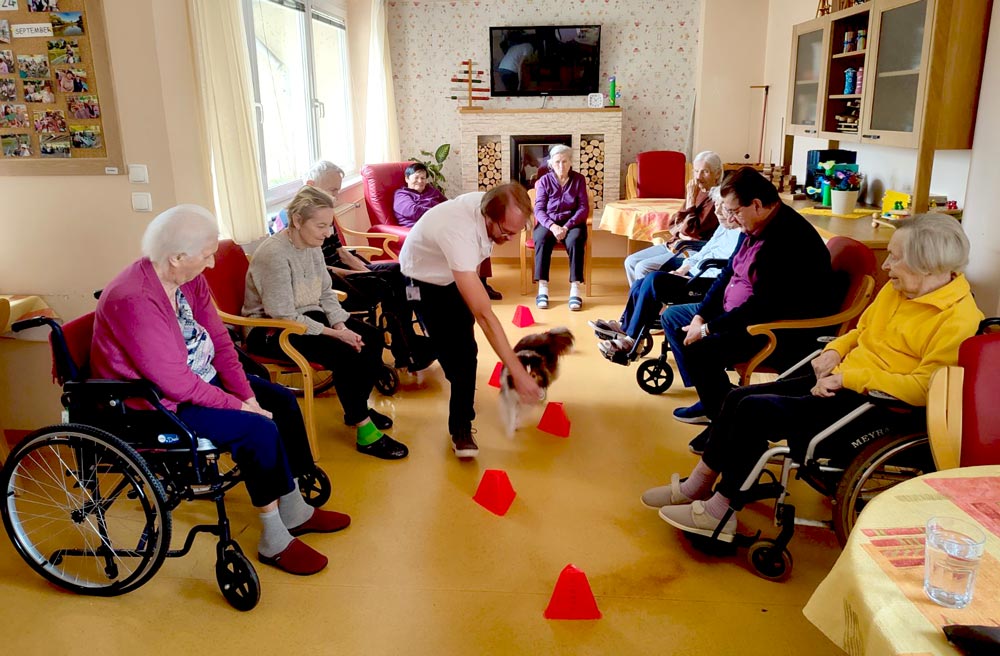
Dog-assisted activities are primarily intended to improve quality of life and well-being, provide companionship and relaxation, and encourage participation in a range of activities. Through its presence, the dog helps create a pleasant and supportive environment for people of different ages and with different needs.
Dog-Assisted Therapy
Dog-assisted therapy is a planned and goal-oriented form of professional intervention in which a dog is involved in achieving therapeutic goals. It is carried out in cooperation with qualified professionals and is adapted to the needs of the individual participant.
Dog-Assisted Education
Dog-assisted education incorporates a dog into the educational process. It enables children and young people to explore different topics through hands-on experiences, and activities can also be connected with the content of the school curriculum.
Read for PET – R.E.A.D.®
Read for PET is a programme in which a dog helps create a pleasant and supportive environment for a child to read. The child reads to the dog, who does not judge or correct them, allowing reading to be primarily a positive and enjoyable experience.
Listen for PET
Listen for PET is an activity in which a dog acts as a motivator and provides support in developing a range of communication and listening skills. Activities are adapted to the participants and their needs and can take place individually or in groups.
Positive Effects of Dog-Assisted Interventions
The positive effects of dog-assisted interventions can be observed across different areas of human functioning. They can influence physical well-being and motor skills, mental health and emotional well-being, social relationships and inclusion, cognitive and educational abilities, as well as speech and communication skills. Depending on the purpose and way in which an intervention is carried out, dog-assisted interventions can therefore support the holistic development of an individual and contribute to improved well-being and quality of life.
We have also prepared summaries of diploma and master’s theses by our professional collaborators, available in our Knowledge Library.
Physical Well-Being
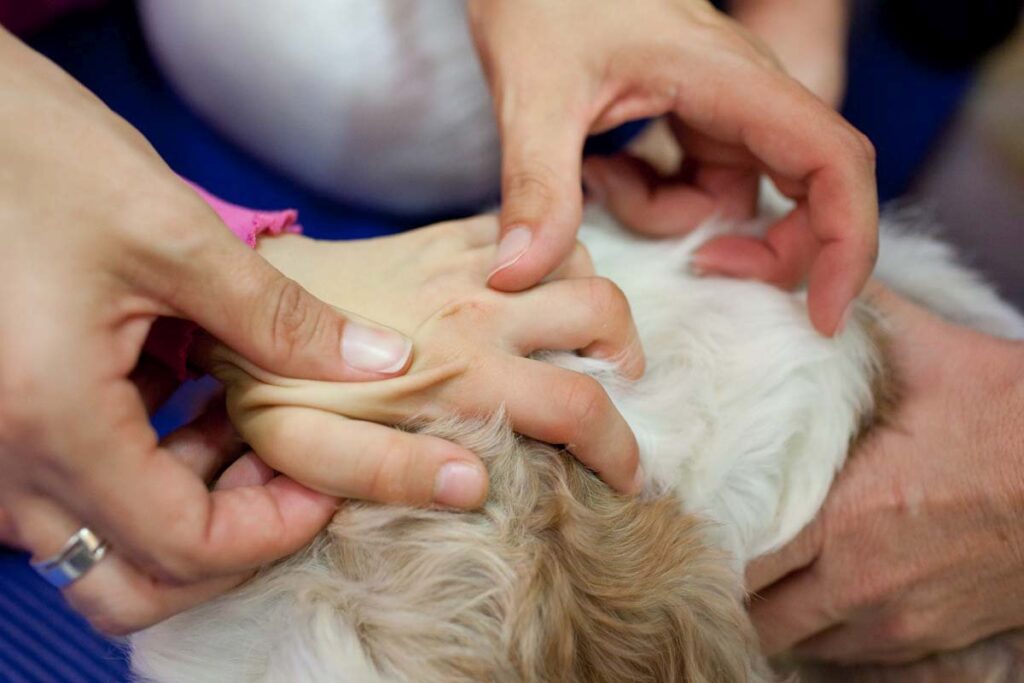
Dog-assisted interventions can make an important contribution to improving physical and motor skills. Various activities with a dog can encourage balance, mobility, coordination, endurance and strength. Activities may also include improving hand-eye coordination, developing fine motor skills, and practising the ability to grasp and handle objects. Moving and interacting with a dog can encourage better posture, increase the range of individual movements, and contribute to greater physical activity and functional ability. Another important benefit is tactile stimulation, provided through touching, petting, brushing and other activities involving the dog.
Mental Health
Dog-assisted interventions can have an important impact on an individual’s emotional well-being and mental health. The presence of a dog can help reduce feelings of anxiety and loneliness and make it easier for an individual to relax and focus on the present moment. In a safe and supportive environment, a dog can help individuals express and recognise emotions and encourage the development of empathy, trust and positive relationships. Dog-assisted interventions can also provide support when coping with loss and grief. Through positive experiences, successful cooperation and a sense of acceptance, individuals can strengthen their self-esteem, sense of self-worth and ability to trust.
Social Well-Being
Dog-assisted interventions encourage the development of social skills and provide a safe and supportive environment in which individuals can learn appropriate forms of social behaviour. Through activities with a dog, individuals learn appropriate ways of touching, both accepting and initiating physical contact, making eye contact, and cooperating effectively with others. At the same time, they develop the ability to offer and accept help, receive and provide constructive feedback, and give and accept praise, rewards and gratitude.
Activities with a dog can encourage independent decision-making, reduce inappropriate or manipulative behavioural patterns, and strengthen a sense of belonging to a group. In this way, dog-assisted interventions can contribute to higher-quality social interactions and easier inclusion in the social environment.
Cognitive and Educational Development
Dog-assisted interventions can support the development of a range of cognitive and learning abilities while increasing motivation to participate in activities. The presence of a dog can contribute to better and more sustained attention and greater focus on a task. Through various activities, both short-term and long-term memory and the ability to recall previously learned information can be strengthened.
Dog-assisted interventions can also support the development of reading skills and reading comprehension, problem-solving abilities, and a better understanding and knowledge of different concepts. Learning in this way is often more relaxed, active and motivating, which can make it easier for individuals to acquire new knowledge and skills.
Speech and Communication
Dog-assisted interventions can encourage the development of speech and communication skills in a relaxed and supportive environment. Through activities with a dog, individuals develop verbal communication skills, expand their vocabulary and gain confidence in expressing themselves.
By talking about the dog, its needs and shared activities, they learn to ask questions and respond to them appropriately. Activities can also encourage more accurate and clearer pronunciation and the active use of language in everyday situations.
DONATE
Every donation makes a difference and helps us do our work even better.
Send an SMS to 1919 with one of the keywords: PET1, PET5 or PET10.