The Dog Becomes an Important Part of the Learning Environment
Animal-Assisted Education (AAE) is a planned intervention for educational and learning purposes in which a dog is incorporated into the learning process. It can be delivered in kindergartens, primary schools and other institutions and organisations that provide education for children and young people.
The purpose of an AAE programme can vary considerably. Through direct interaction with a dog, children can learn about living in harmony with nature, responsible relationships with animals, caring for animals, volunteering and responsibility towards the community. At the same time, a dog can provide motivation and support when learning new material, taking part in physical activities or receiving additional professional support.
Activities are adapted to the participants’ age, abilities and needs and can be linked to the content of the school curriculum. They can be delivered individually or in groups, as a one-off session or as a series of sessions taking place over a longer period.
Learning Through Experience
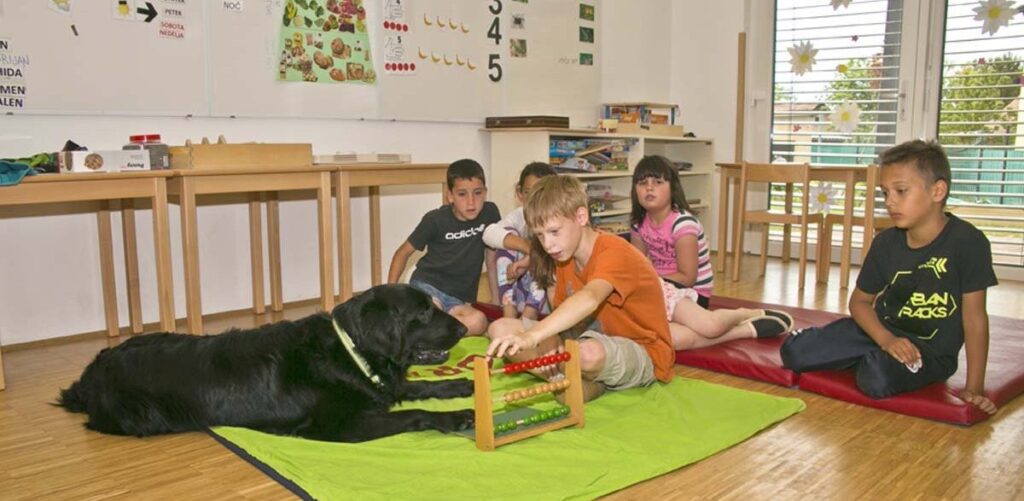
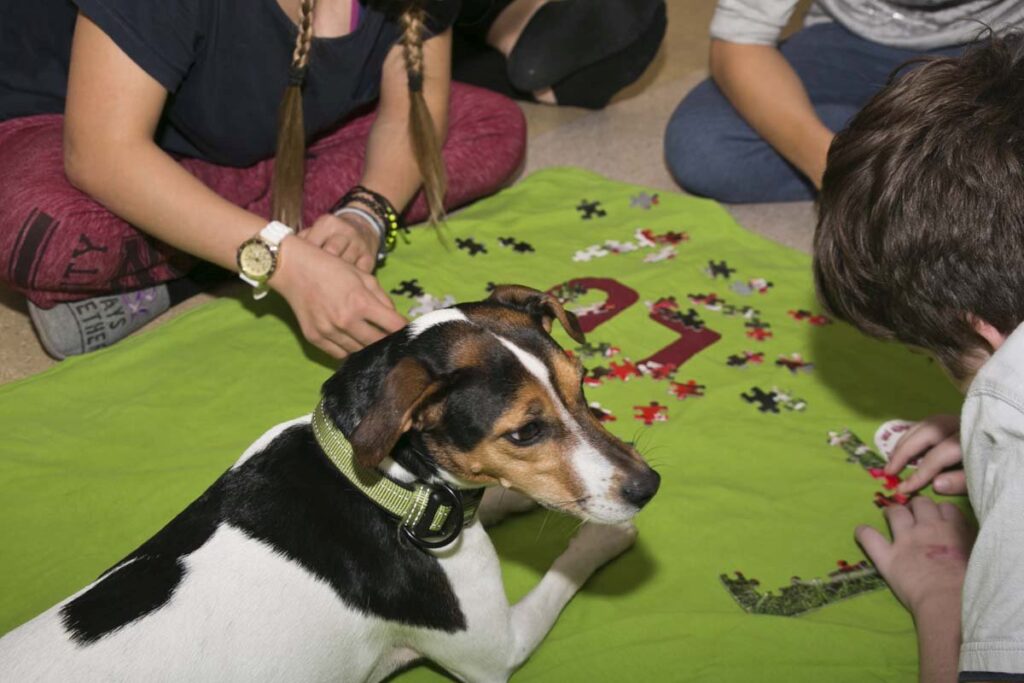
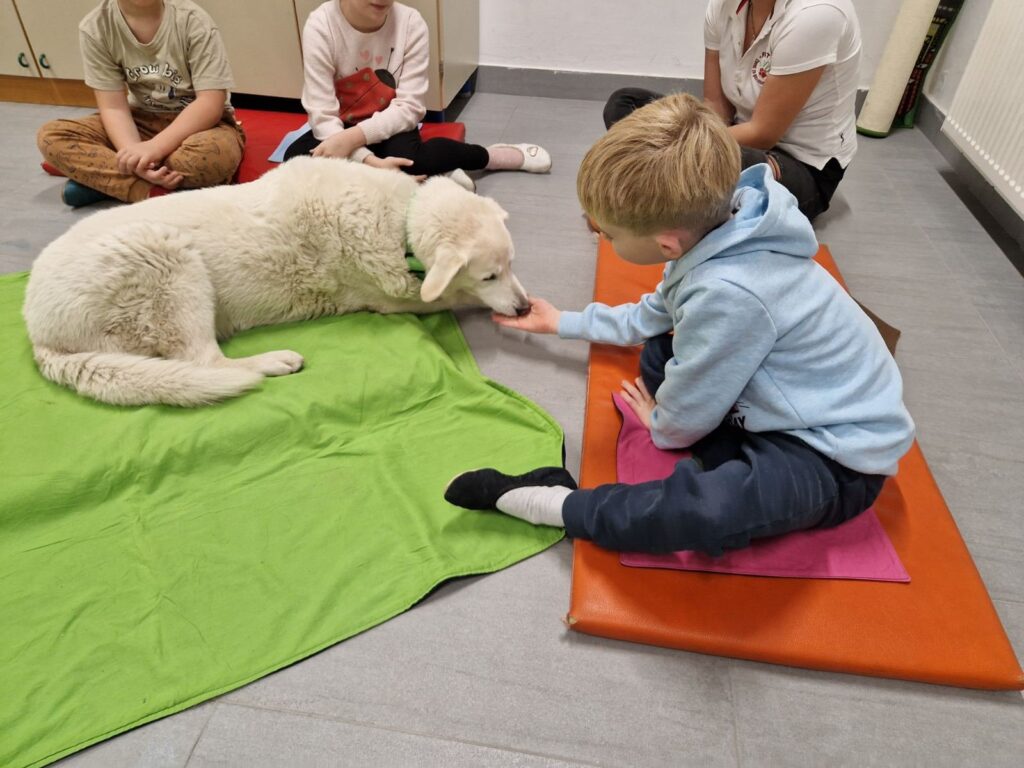
When a dog becomes part of the learning process, learning can become more concrete, active and engaging. The presence of a dog can provide additional motivation for children to participate and encourage them to take an active role in the activities. They can explore learning content through observation, movement, problem-solving, communication and direct experience.
Programmes can cover a wide range of topics related to science and nature, society, health, physical activity, animal behaviour and responsible attitudes towards the environment. The content and level of difficulty are adapted to the children’s age and to the objectives of the programme.
The dog is not simply present in the room but is involved in carefully planned activities. Its presence creates opportunities for learning and interaction, while also allowing children to explore certain topics in a more direct and accessible way.
Every Session Is Adapted to the Individual or Group
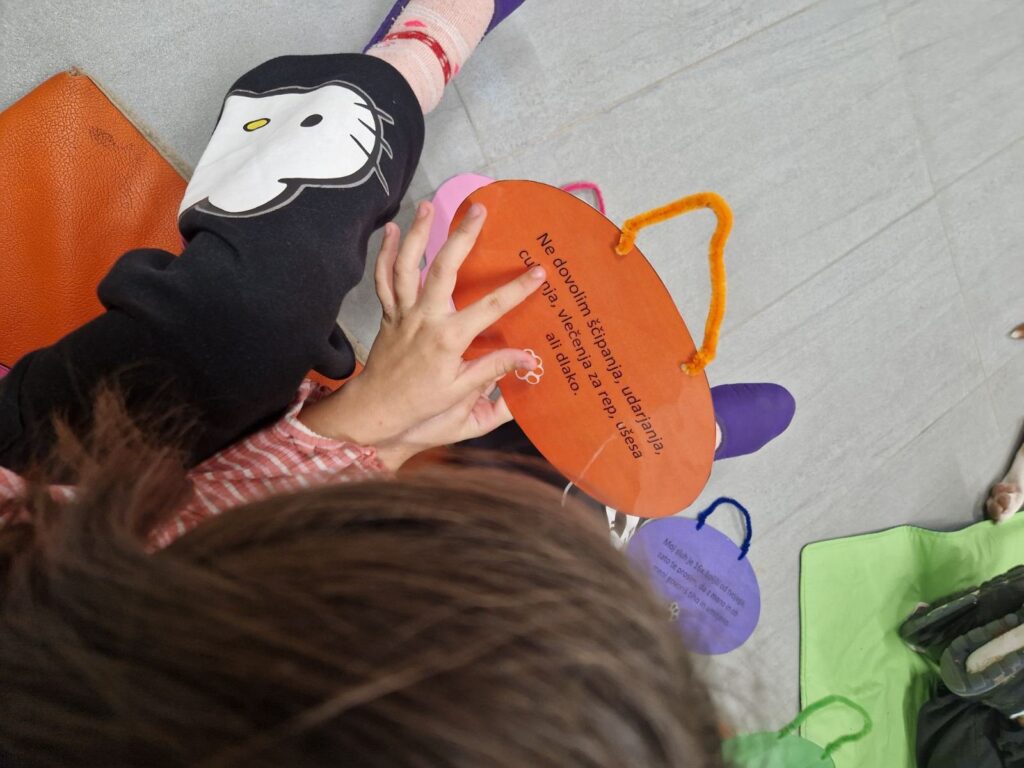
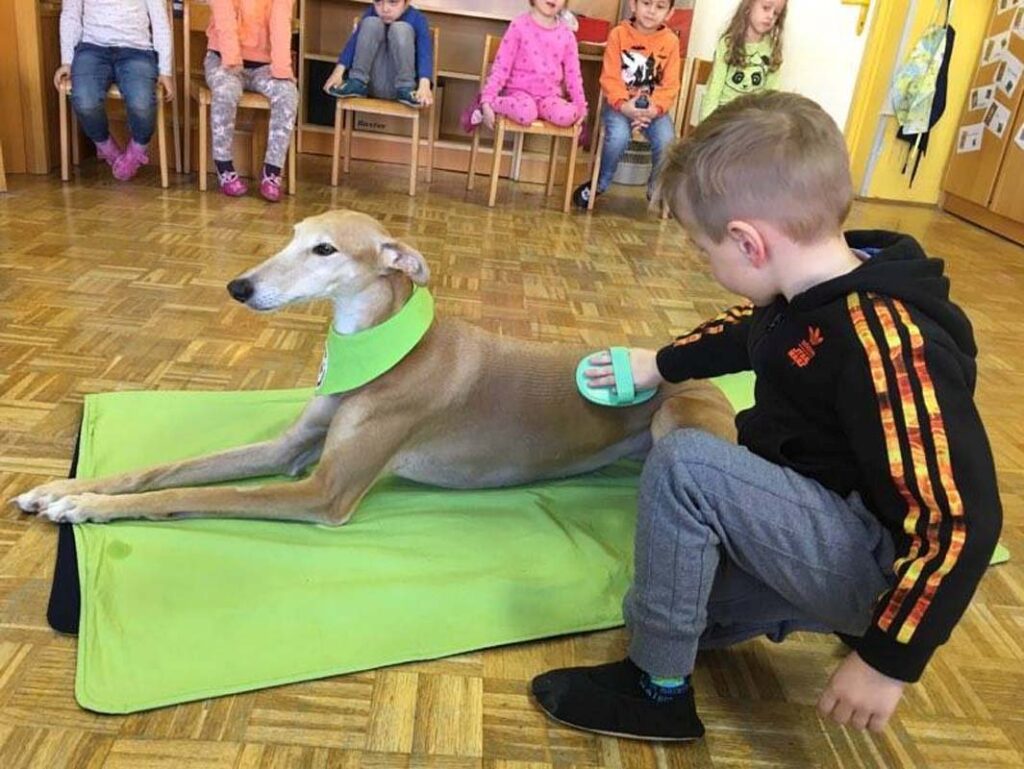
Animal-Assisted Education can be delivered with individuals or groups. A programme may be designed for an entire group or adapted to individual children who need additional support with participation, learning or interaction. When working with groups, a maximum of 30 participants can take part in an activity.
A session can last between 15 and 60 minutes, with its length and structure adapted to the children’s age and abilities and to the complexity of the activity. Breaks are also an important part of every session, giving the dog an opportunity to rest and ensuring its well-being.
Activities can be delivered as a one-off session or as a planned series of sessions. In longer-term programmes, the content can be gradually developed and meaningfully integrated into the institution’s educational process.
How Is It Delivered?
Animal-Assisted Education is delivered in kindergartens, primary schools and other institutions and organisations that provide education for children and young people. Activities can take place in classrooms, gyms, outdoors or in other spaces that allow for safe and uninterrupted work.
When planning a programme, we take into account the characteristics of the space, group size, children’s age and the objectives of the activity. It is important that the environment is suitable for both the participants and the dog and allows the programme to be delivered safely, calmly and effectively.
Example of good practice: Animal-Assisted Education at Hinko Smrekar Primary School in Ljubljana, where a dog was incorporated into the educational process.

DONATE
Every donation makes a difference and helps us do our work even better.
Send an SMS to 1919 with one of the keywords: PET1, PET5 or PET10.